Project Summary
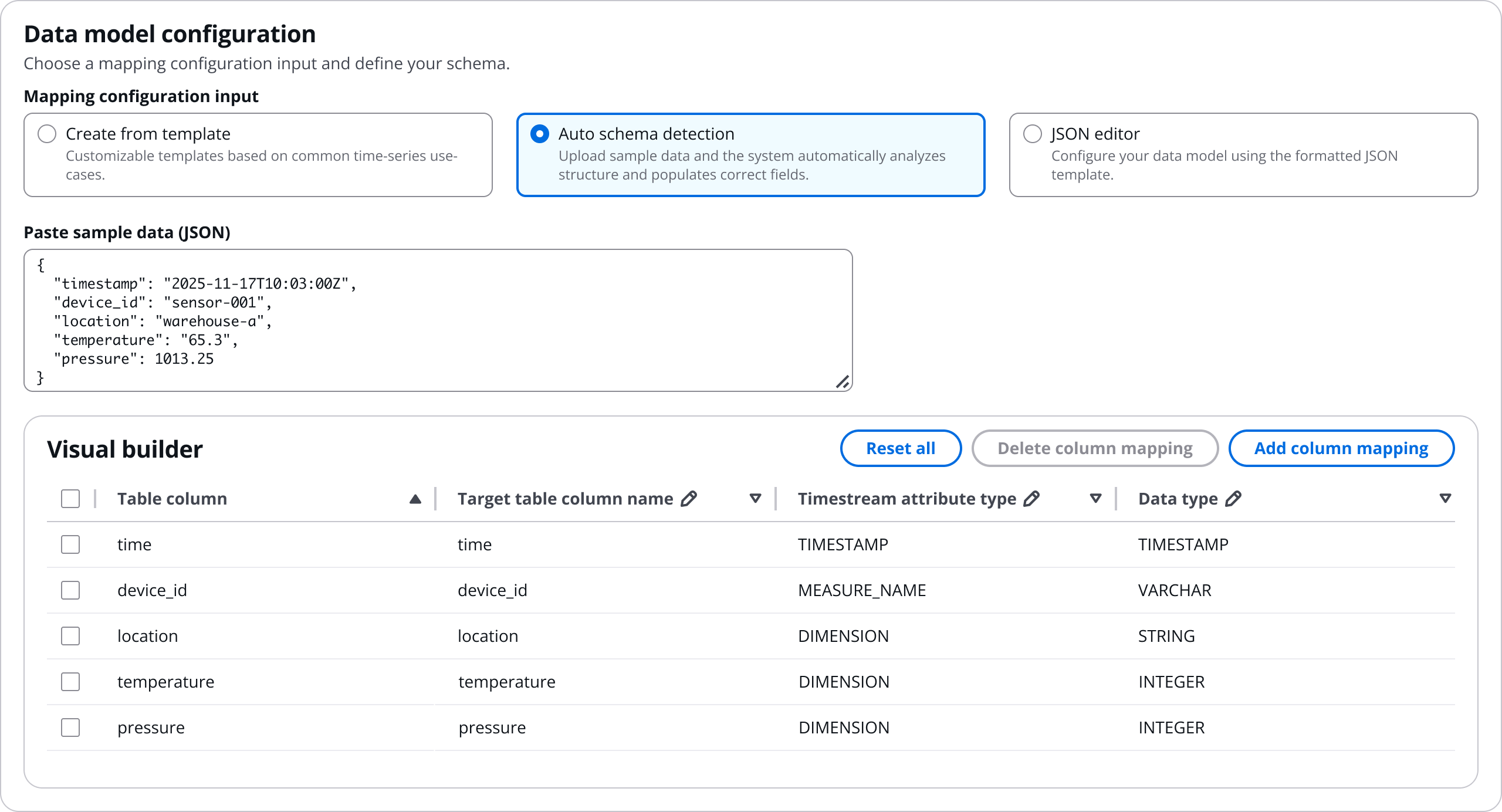
A visual design interface that simplifies Amazon Timestream data model creation. The tool compresses setup timelines from 90+ days to hours through template-based creation, auto schema detection, and visual relationship mapping.
Discovery
What I learned about users, their challenges, and the opportunity space.
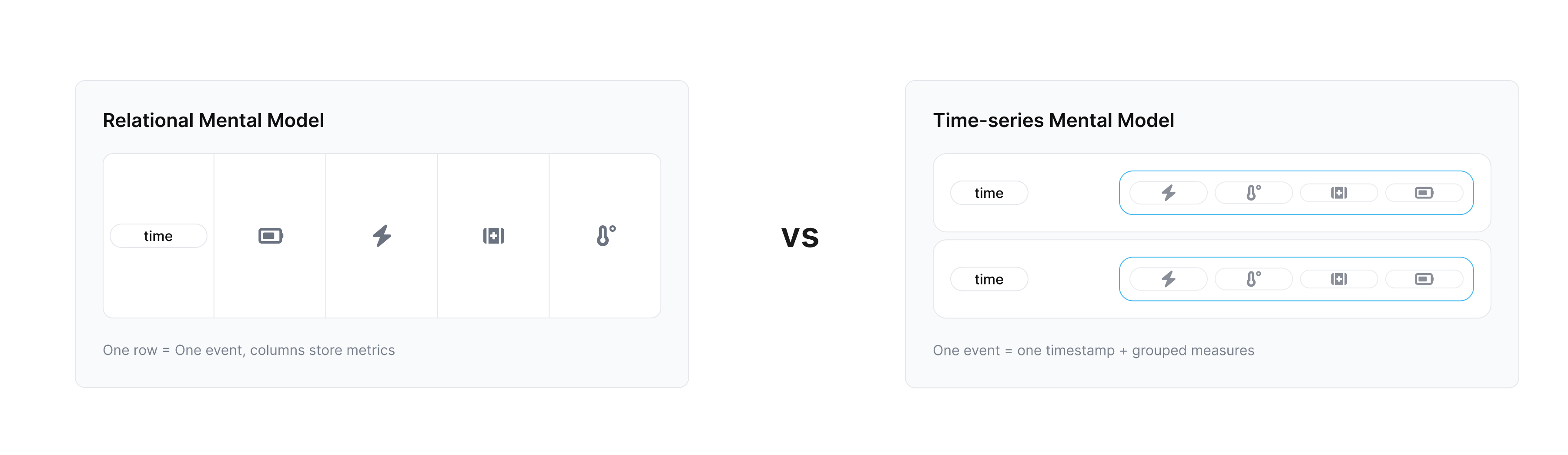
Developers applied SQL mental models to schemaless architecture
Developers with relational database experience instinctively applied SQL patterns to Timestream's schemaless time-series structure, creating inefficient schemas. Structural errors were only discovered after data ingestion, leading to costly restarts.
Design Approach
How I translated insights into a solution through design and development.
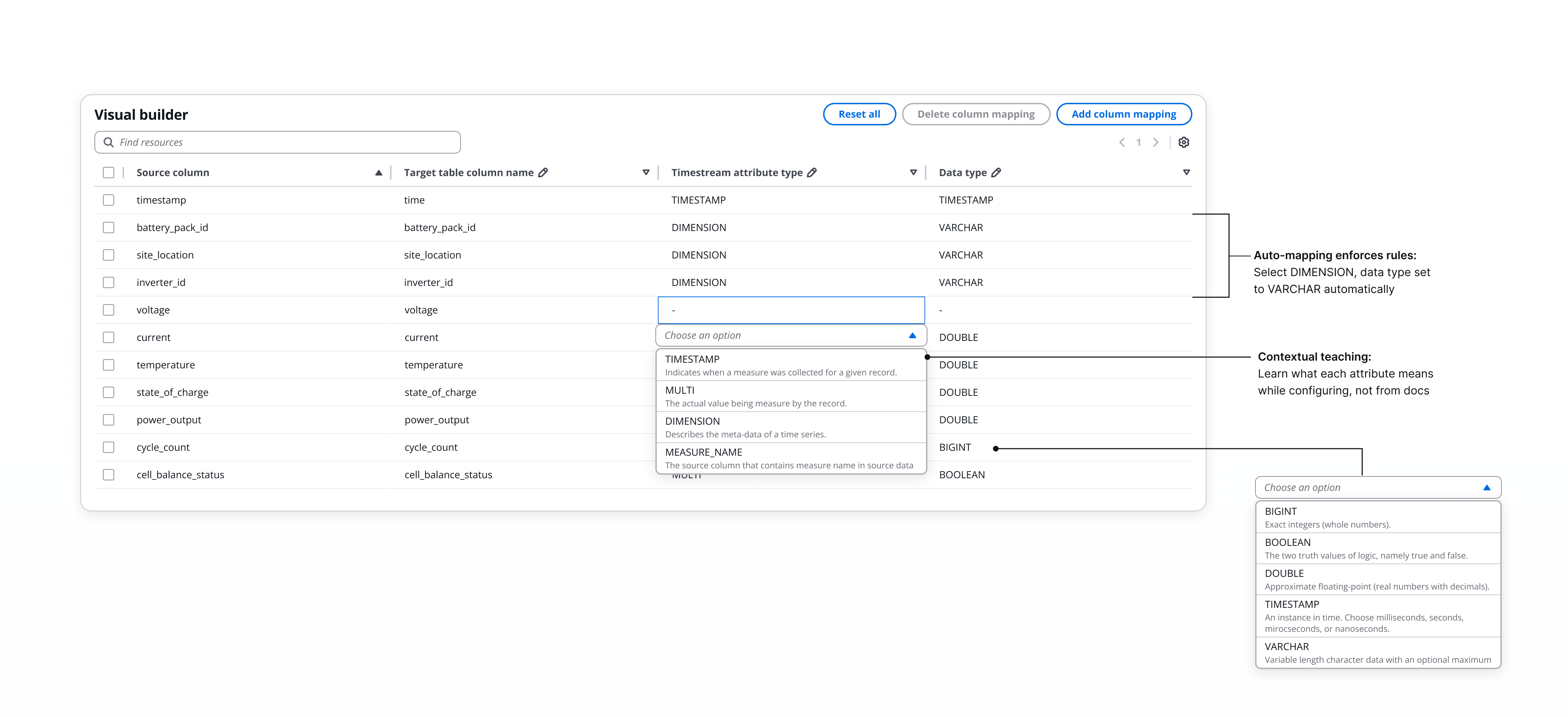
Bridge mental models through visual building
Rather than more documentation or tutorials, I designed a visual builder that meets users where they are—leveraging their existing SQL knowledge while guiding them toward schemaless best practices through interaction.
What I Delivered
Three core capabilities that transformed the data modeling experience.
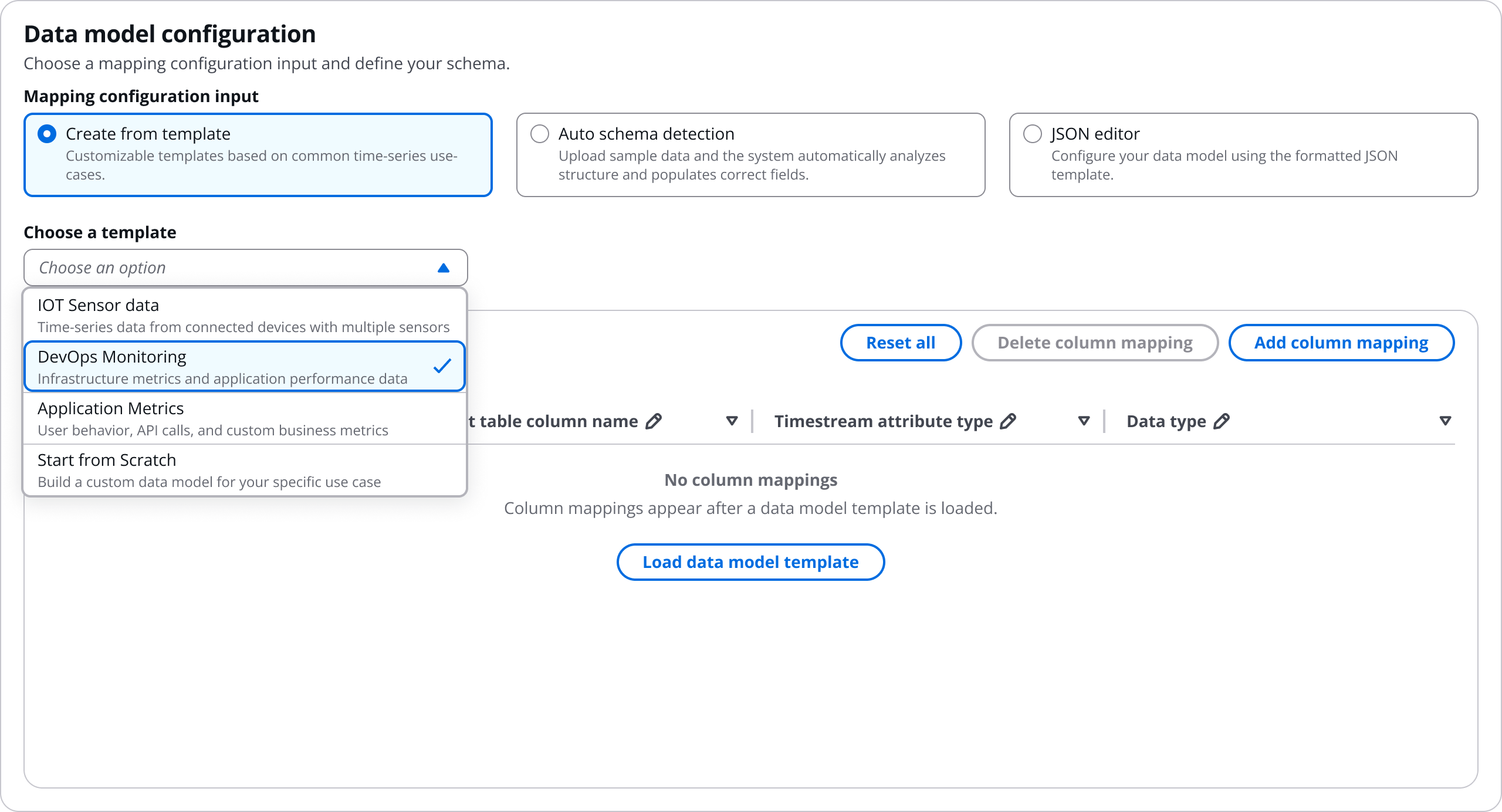
Template-Based Creation
Pre-configured templates organized by use case—IoT, DevOps, application metrics—provide validated starting points that follow Timestream best practices, eliminating guesswork for new users.Auto Schema Detection
Upload sample data and the system automatically analyzes structure, populating correct fields and eliminating guesswork around dimensional vs. measure categorization.
Visual Mappings Parsed to API Format
I designed the system architecture to automatically parse mappings from the Visual Builder component into the required API format. Using a table as the base component made the mapping configuration straightforward to implement and maintain.Key Decisions
These are the decisions I made that shaped the product's experience.
Visual builder over documentation
Users don't read documentation when they're stuck—they need guidance embedded directly in the workflow. The visual builder provides in-context learning while users complete real tasks.
Template-first approach
Starting from a blank canvas overwhelms users who don't yet understand the domain. Templates provide validated starting points that encode best practices.
Progressive disclosure for complexity
Complex schemas with dozens of columns overwhelm users. Progressive disclosure reveals details on demand while keeping the default view scannable.
Interested in working together?
Let's talk about how I can help solve complex product challenges for your business.